

What is a backlink SEO? If your website is not getting traffic from Google, backlinks may be one big reason. You can publish helpful blog posts, improve your website design, and even write better content than your competitors, but without strong SEO backlinks, your pages may still stay hidden in search results.
A backlink is simply a link from one website to another. In SEO, backlinks help search engines understand which pages people trust. When a trusted website links to your content, it sends a signal that your page may also be useful and valuable. This is why backlinks are a major part of modern link building and search engine rankings.
Search engines use backlinks like votes of confidence. A high-quality backlink from a relevant website can help improve your domain authority, page authority, organic traffic, and online visibility. Link-building also helps search engines crawl new pages faster and understand your content better through anchor text and contextual links.
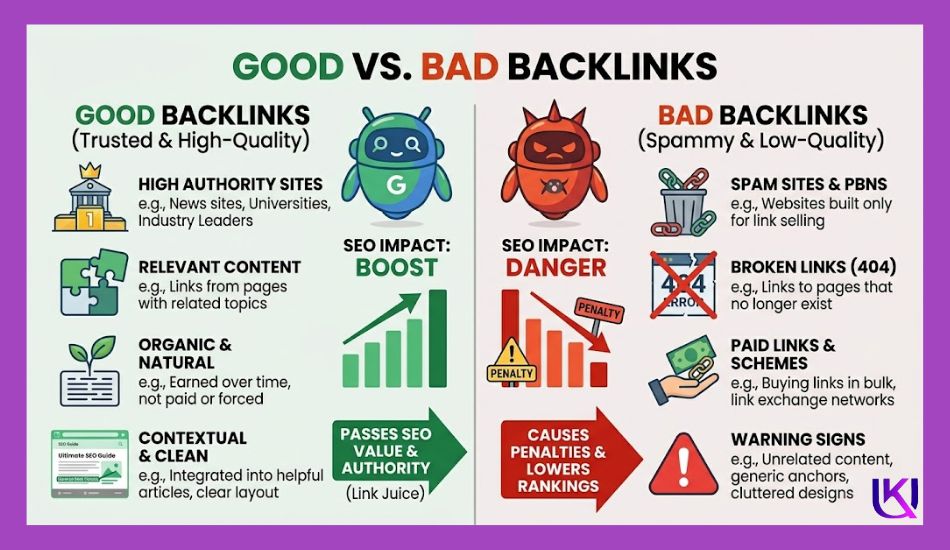
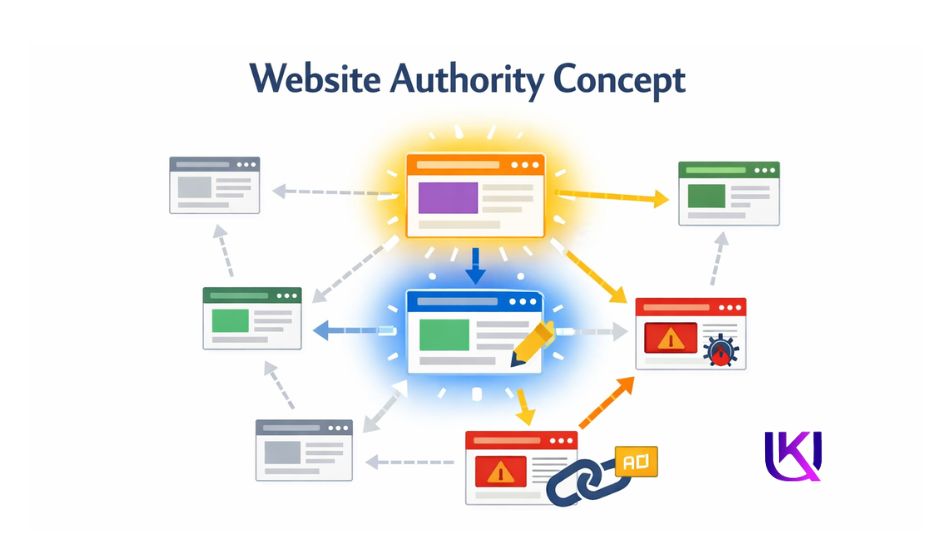
Not all backlinks are good, though. Spam links, link farms, and low-quality external links can hurt your SEO rather than help it. That is why smart link building focuses on relevance, trust, natural anchor text, and links from high-authority websites.
Popular and trusted SEO tools like Ahrefs, Semrush, Moz, and Ubersuggest help website owners study referring domains, nofollow links, dofollow backlinks, referral traffic, and spam score to build safer SEO strategies.
In this beginner-friendly guide, you will learn how backlinks work, why they matter for Google rankings, the difference between internal links and external links, and how you can start getting high-quality backlinks for your website in a safe way.
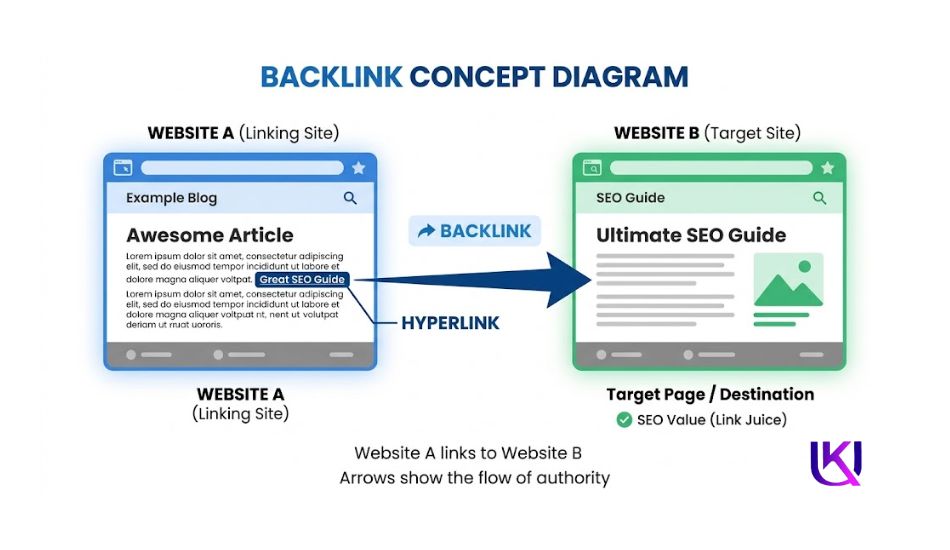
What Is a Backlink in SEO?
A backlink is a clickable link from one website to another website. In SEO (Search Engine Optimization), link-building helps search engines understand which pages people trust online. You may also hear backlinks called:
- Inbound links
- Incoming links
- External links
For example, imagine a popular marketing blog links to your article about SEO tips. That link becomes a backlink for your website. In simple words, another site is recommending your content to its readers.
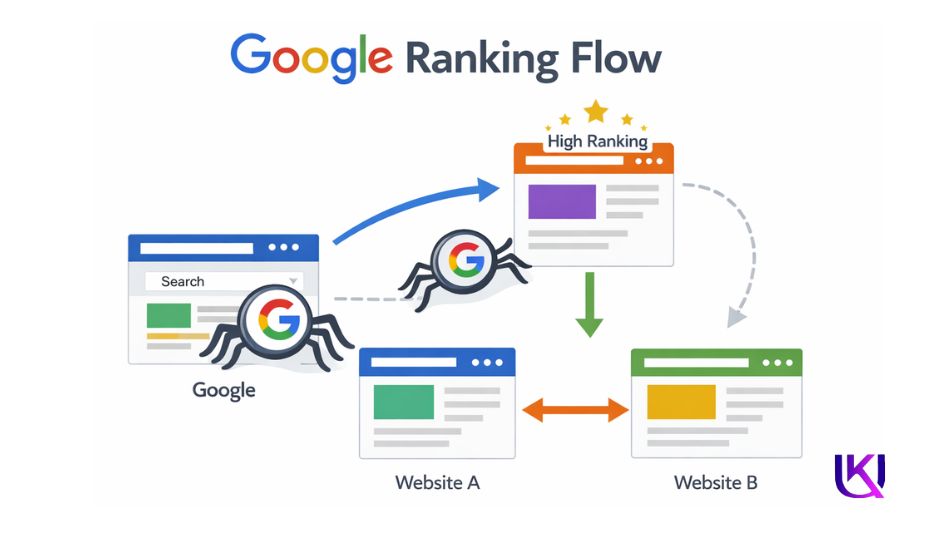
Search engines like Google use backlinks as trust signals. When trusted websites point to your page, Google may see your content as more useful and relevant. This can help improve your search engine rankings and bring more organic traffic to your website.
Think of backlinks like online recommendations. If many trusted people recommend a restaurant, more people believe the restaurant is good. Backlinks work in a similar way for websites.
Here is a simple example:
| Website Action | SEO Result |
| A trusted blog links to your article | Google sees trust and relevance |
| Readers click the link | You get referral traffic |
| Search engines crawl the backlinks | Your page may index faster |
| Relevant anchor text is used | Google better understands your topic |
Link-building also helps search engines discover new pages. Search engine crawlers follow links across the web to find content. If your page has strong backlinks, it becomes easier for search engines to crawl and understand your website.
However, not every backlink helps SEO. A backlink from a trusted and relevant website is much stronger than hundreds of spam links from unrelated websites. This is why modern link building focuses more on quality than quantity.
SEO tools help website owners check backlinks, referring domains, anchor text, domain authority, spam score, and link quality.
When you understand how backlinks work, you can start building safer and smarter SEO strategies that help your website grow naturally over time.
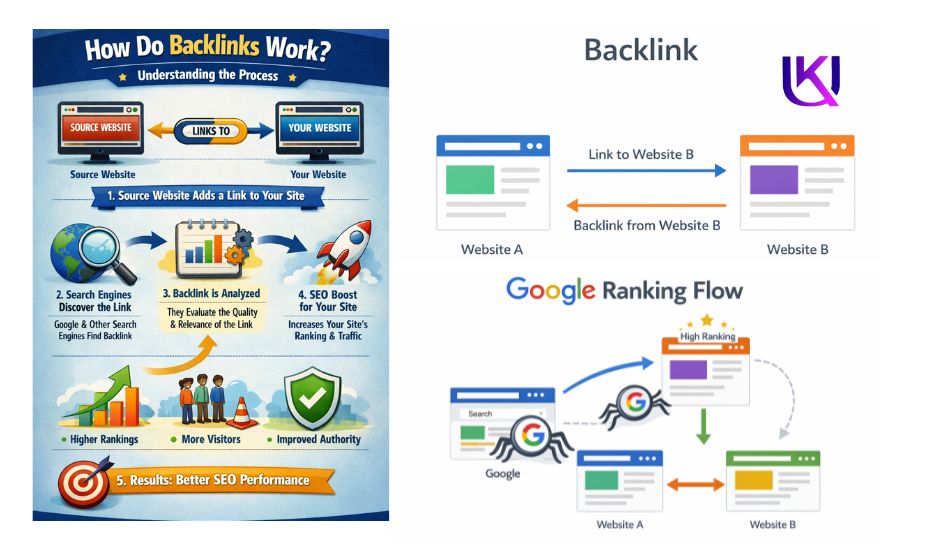
How Do Backlinks Work?
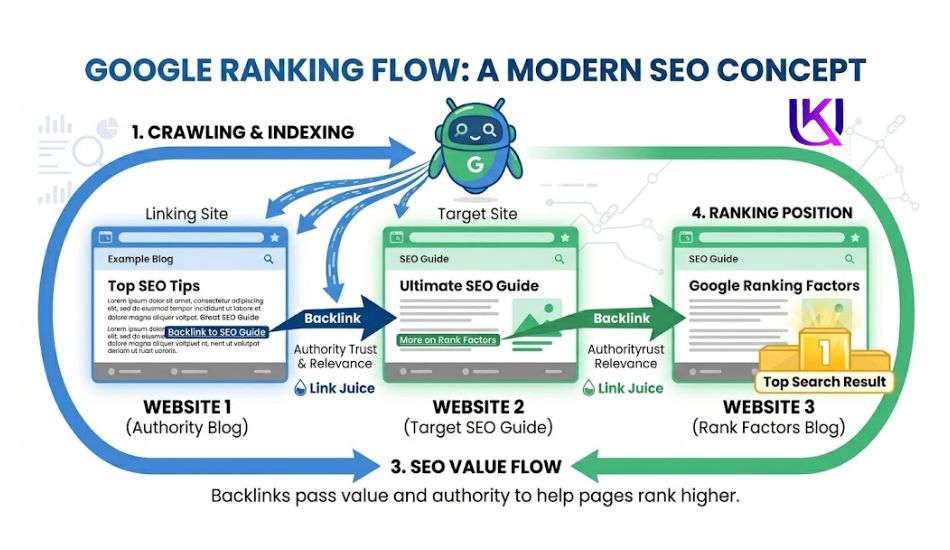
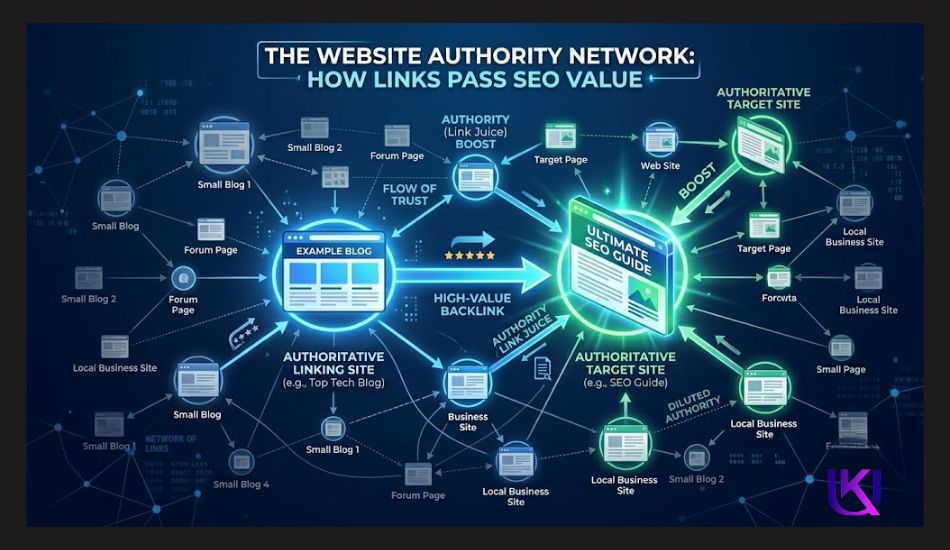
Backlinks connect websites across the internet. When one website links to another page, search engines follow that link to discover and understand content.
Example: If a trusted SEO blog links to your article, Google may see your page as more useful and trustworthy.
Many SEO experts call and pass value “link equity” or “link juice.”
| Step | What Happens |
| A website links to your page | You gain a backlink |
| Google crawls the link | Your page gets discovered |
| Google studies the source website | Trust and relevance are checked |
| Authority passes to your page | Rankings may improve |
What Is Anchor Text?
Anchor text is the clickable text inside a link.
Examples:
- beginner SEO guide
- backlink tips
- best SEO tools
Natural anchor text helps search engines understand your content better.
Types of Backlinks
| Backlink Type | Meaning |
| Dofollow backlink | Passes SEO value |
| Nofollow backlink | Usually does not pass the full SEO value |
Both types can still bring referral traffic and visibility.
Why Are Backlinks Important for SEO?
Backlinks are one of the strongest Google ranking signals. When trusted websites link to your pages, search engines may see your content as valuable and reliable.
Good backlinks can help you:
- improve rankings
- increase organic traffic
- build website authority
- Get referral traffic
- improve page discovery
| Benefit | Why It Matters |
| Higher rankings | Better visibility in Google |
| More traffic | More visitors without ads |
| Better authority | Builds trust |
| Referral traffic | Visitors from other websites |
| Faster indexing | Search engines find pages quickly |
Today, a few high-quality backlinks are better than many low-quality links.
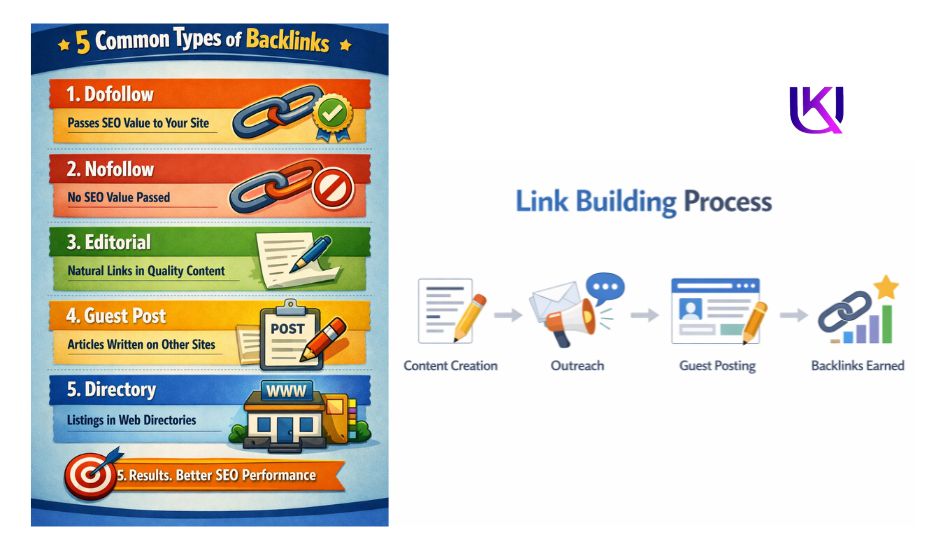
5 Common Types of Backlinks
Not all backlinks work the same way.
1. Dofollow Backlinks
These are the most valuable backlinks for SEO.
- Pass authority
- help rankings
- improve trust
2. Nofollow Links
These links usually do not pass full SEO value.
- useful for traffic
- help brand visibility
- make backlink profiles look natural
3. Editorial Backlinks
These are natural links added by other websites.
- very high quality
- strong trust signal
- earned through useful content
4. Guest Post Backlinks
These come from writing articles for other websites.
- good for beginners
- improves exposure
- builds authority
5. Directory Backlinks
These come from online business directories.
- easy to get
- useful for local SEO
- lower SEO value
| Type | SEO Value | Main Use |
| Dofollow | High | Rankings |
| Nofollow | Medium | Traffic |
| Editorial | Very High | Trust |
| Guest Post | Medium to High | Authority |
| Directory | Low | Visibility |
What Makes a Backlink High Quality?
A backlink is valuable when it comes from a trusted and relevant website.
1. Relevance
The linking website should match your topic.
Example:
- SEO blog linking to SEO article = good
- Cooking blog linking to SEO article = weak
2. Website Authority
Trusted websites carry more SEO value.
Good websites usually:
- have real traffic
- publish quality content
- have strong trust in online
3. Natural Anchor Text
Good anchor text looks natural.
Examples:
- learn SEO basics
- backlink guide
- Read this article
Avoid keyword stuffing.
4. Context Around the Link
Links inside useful content work better than links in sidebars or footers.
5. Real Traffic
Strong backlinks can also bring real visitors to your website.
| Factor | Good Backlink | Weak Backlink |
| Relevance | Related topic | Unrelated topic |
| Source | Trusted site | Spam site |
| Placement | Inside content | Footer/sidebar |
| Traffic | Real visitors | No traffic |
| Anchor Text | Natural | Spammy |
Backlinks are still one of the strongest ranking signals, but they now work with trust, relevance, and content quality. If your content is helpful and your links are natural, your website has a much better chance of growing in search results over time.
Bad Backlinks That Can Hurt SEO: Can Backlinks Improve Your Google Ranking?
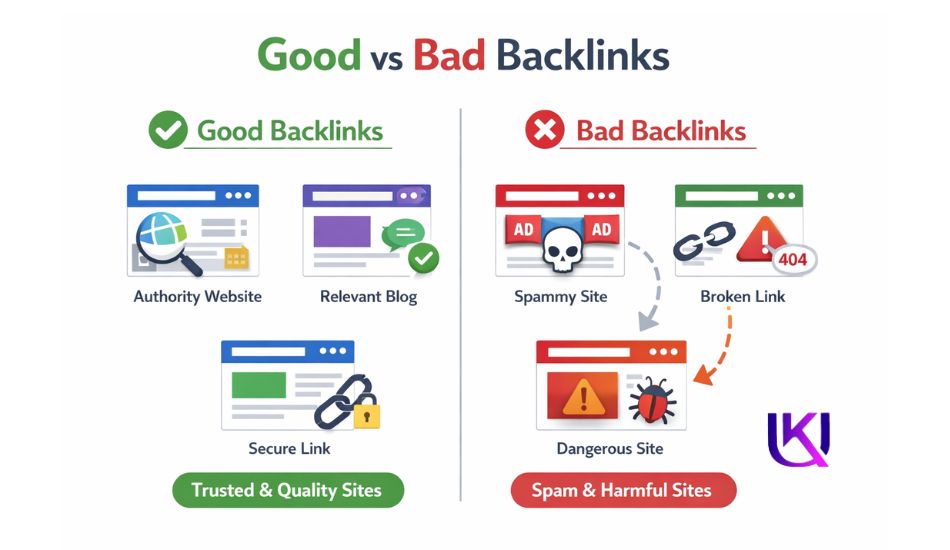
Some backlinks can damage your website instead of helping it.
| Bad Link Type | Why It Is Harmful | Description |
| Spam links | Low trust | Some backlinks can damage your website instead of helping it. |
| Link farms | Manipulative | These come from fake or low-quality websites. |
| Paid spam links | Risk of penalties | Buying low-quality backlinks can violate Google rules. |
| Irrelevant links | Weak relevance | Links from unrelated websites often have weak SEO value. |
| Keyword stuffing | Looks unnatural | Using the same keyword repeatedly can look unnatural. |
Modern SEO focuses on clean and natural link building.
Backlinks vs Internal Links: Do Link-Building Still Matter for SEO in 2026?
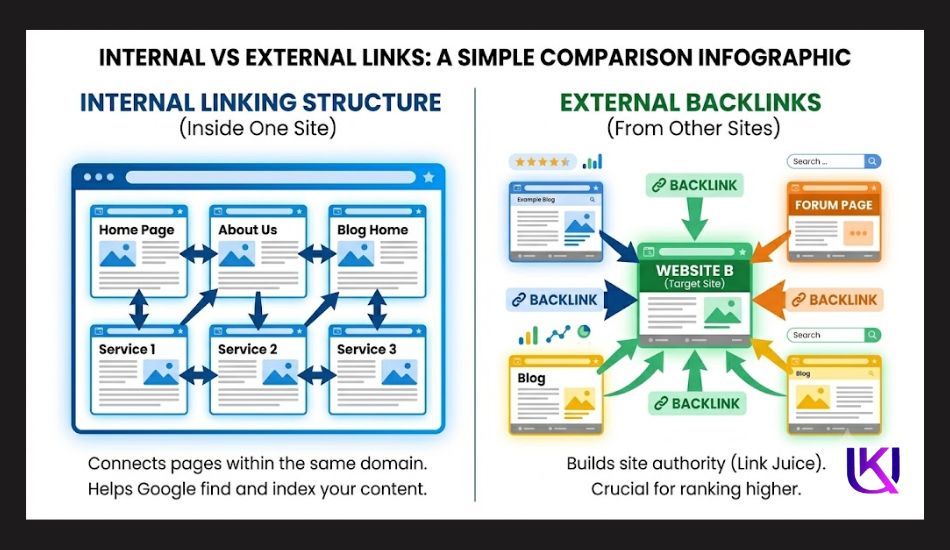
Both backlinks and internal links are important for SEO, but they work in different ways. If you understand the difference, you can build a stronger website structure and improve rankings more easily.
Search engines like Google use both link types to understand your website and content relationships.
What Are Backlinks?
Backlinks are links from other websites pointing to your website.
- Come from external sites
- Build trust and authority
- Bring new visitors
- Help improve rankings
Example: A blog on another website links to your SEO article.
What Are Internal Links?
Internal links are links between pages on your own website.
- Stay inside your website
- Help users navigate pages
- Spread link value across pages
- Help search engines understand the structure
Example: Your blog post links to another blog post on your site.
Search engines like Google use both backlinks and internal links to understand your website structure, trust level, and content relationships.
Here is a simple breakdown to understand both clearly:
| Point | Backlinks | Internal Links |
| Meaning | Links from other websites to your site | Links between pages inside your own website |
| Source | External websites | Your own website |
| Main Purpose | Build trust and authority | Improve site structure and navigation |
| SEO Impact | Very high ranking signal | Medium to high supporting signal |
| Traffic Type | Referral traffic from other sites | Navigation traffic within your site |
| Control | Not fully in your control | Fully controlled by you |
| Example | A blog links to your article | Your blog links to another blog post |
| Role in SEO | Helps Google trust your site | Helps Google understand your site |
Key Simple Understanding
- Backlinks are trust from outside websites
- Internal links are structured inside your website
Why Both Matter
- Backlinks help your site become more trusted on the internet
- Internal links help search engines understand and organize your content
A strong SEO website always uses both together for better ranking, better crawling, and better user experience.
How Beginners Can Start Link Building?
If you are new to SEO, link building may look hard at first. But you can start with simple, safe steps that slowly build your website’s trust over time.
Search engines like Google prefer natural backlinks that come from real value, not shortcuts.
1. Create Helpful Content First
Good backlinks start with useful content.
- Write simple guides
- Solve real problems
- Answer beginner questions
If your content is helpful, other websites may naturally link to it.
2. Guest Posting
Guest posting means writing relevant articles for other websites.
- You write content for another blog
- They give you a backlink
- You get exposure plus authority
Make sure the website is relevant to your topic.
3. Broken Link Building
This method uses broken links on other websites.
- Find broken links on related sites
- Suggest your content as a replacement
- Get a backlink if they accept
It is helpful for both sides.
4. Resource Page Links
Some websites list useful resources.
- Find “useful links” pages
- Submit your content
- Get listed as a helpful resource
5. Social Sharing
Share your content on:
- social media
- forums
- communities
This helps people discover your content and increases the chances of natural backlinks.
Simple Beginner Strategy
| Step | Action |
| 1 | Create helpful content |
| 2 | Share it online |
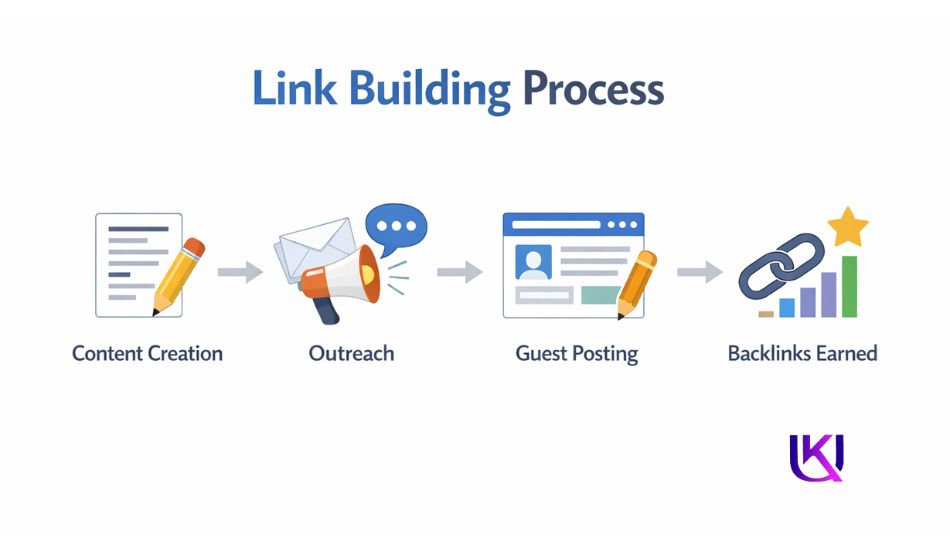
| 3 | Reach out to related websites |
| 4 | Build guest posts |
| 5 | Earn natural backlinks over time |
SEO tools like Ahrefs, Semrush, and Moz help you find link opportunities, analyze competitors, and track referring domains so you can build backlinks more safely and smartly.
Do Backlinks Still Matter in 2026?
Yes, backlinks still matter a lot in SEO, even in 2026. But the way they work has changed. Today, it is not about getting many links. It is about getting real, trusted, and relevant links.
Search engines like Google now focus more on quality signals, user value, and content trust rather than just link numbers.
Quality Matters More Than Quantity
- Earlier, SEO worked like this: the more backlinks, the better the ranking
- Now it works like this: better backlinks, better ranking
- A few strong links from trusted sites can beat hundreds of weak links.
Relevance Is Very Important
Backlinks must come from related topics.
Example:
- SEO blog linking to SEO guide
- Random gaming site linking to SEO guide
Search engines understand topic relevance very clearly now.
EEAT and Trust Signals Matter More
Google now uses EEAT signals:
- Experience
- Expertise
- Authoritativeness
- Trustworthiness
Backlinks help support these signals when they come from trusted websites.
Natural Link Building Is the Future
Modern SEO avoids shortcuts like:
- spam links
- paid bulk links
- link farms
Instead, it focuses on:
- useful content
- real mentions
- organic sharing
Simple 2026 SEO Reality: Do Backlinks Still Matter for SEO in 2026?
| Old SEO | New SEO |
| Many backlinks | A few high-quality backlinks |
| Quantity focus | Quality focus |
| Easy manipulation | Hard to fake trust |
| Keyword-heavy links | Natural links |
Backlinks are still one of the strongest ranking signals, but they now work with trust, relevance, and content quality. If your content is helpful and your links are natural, your website has a much better chance of growing in search results over time.
What Is Link Building and Why Is It Unique in 2026?
Link building means deliberately creating opportunities for other sites to link to yours through valuable content, relationships, or outreach. It’s not about spamming links. Modern, ethical link building focuses on creating assets people naturally want to reference.
In 2026, link building stands out as more strategic than ever. Here’s why it feels fresh and effective:
- Integration with AI and semantic search: Links now validate topical authority in ways AI overviews can recognize. High-quality links help your content get cited in AI summaries.
- Digital PR as a powerhouse tactic: Creating newsworthy stories or data that journalists and publishers reference naturally generates editorial links. This blends public relations with SEO for authentic coverage.
- Visual and interactive content renaissance: Interactive infographics, tools, or data visualizations spread more easily across platforms and earn links from diverse sources.
- Relationship-first outreach: Personalized, value-driven pitches replace generic templates. Building genuine connections leads to ongoing link opportunities and collaborations.
- Niche-specific authority building: Links from relevant industry sites matter more than ever for E-E-A-T (Experience, Expertise, Authoritativeness, Trustworthiness).
These approaches feel unique because they prioritize real value and relationships over volume. They align perfectly with how people and AI now discover and trust information.
Conclusion: How Do Beginners Start Building Backlinks?
Backlinks are not just simple links. They are trust signals that help search engines understand your website’s value.
If your website feels stuck, slow, or is not ranking, backlinks may be one of the key reasons. When other trusted websites link to your content, it becomes easier for your pages to gain visibility in search results.
Search engines like Google look at backlinks as a sign of real-world trust. But remember, not all links are equal. A few strong, relevant backlinks are far more powerful than many weak or spammy ones.
The smart approach is simple:
- Create helpful content
- Build real connections
- Earn natural backlinks over time
SEO tools like Ahrefs, Semrush, and Moz can guide you in understanding your backlink profile and finding safe growth opportunities.
If you focus on quality, relevance, and trust, your website will slowly build strong authority and better rankings without risky shortcuts.
Helpful article: Free VS Paid SEO Tools for Beginners: What’s Really Needed for Keyword Research?
FAQs: Are Backlinks Still Important for SEO Today?
1. What is a backlink in SEO?
A backlink in SEO is a link from one website to another website. Link-building works like a vote of trust. When a trusted site links to your page, search engines may see your content as more useful and rank it higher.
2. Why are backlinks important for Google ranking?
Backlinks are important because they help search engines like Google understand which pages are trusted. Good backlinks can improve rankings, increase organic traffic, and build website authority.
3. How do I get backlinks for my website?
You can get backlinks by creating helpful content, writing guest posts, doing broken link building, and sharing your content on social media. The best backlinks come naturally from useful and trusted content.
4. What is the difference between dofollow and nofollow backlinks?
Dofollow backlinks pass SEO value and help improve rankings. Nofollow backlinks do not pass full ranking value, but they can still bring traffic and help build a natural backlink profile.
5. Can backlinks hurt SEO?
Yes, bad backlinks from spam, link farms, or irrelevant websites can hurt your SEO. Search engines may ignore or even penalize unnatural link patterns.
6. How many backlinks do I need to rank on Google?
There is no fixed number. Ranking depends on backlink quality, website authority, content strength, and competition. A few strong backlinks are better than many weak ones.
7. Do backlinks still matter in 2026?
Yes, backlinks still matter in 2026. But quality, relevance, and trust are more important than quantity. Search engines focus on natural and high-value links.
8. What makes a backlink high quality?
A high-quality backlink comes from a relevant, trusted, and authoritative website. It should be placed naturally in useful content and bring real users to your website.
9. How long does it take to see results from link building?
It varies, but expect noticeable improvements in 3–6 months as search engines process and value the new signals. Results compound over time.