

Free VS Paid SEO Tools is one of the biggest questions beginners ask when they start learning keyword research. You may see SEO experts talking about expensive software, advanced dashboards, and premium data tools.
That can make SEO (Search Engine Optimization) feel confusing and costly from day one. Many new bloggers, freelancers, and small business owners worry that they cannot compete without paying for premium subscriptions every month.
The truth is much simpler. Does a beginner truly need to do keyword research right now without wasting money?
Many beginners start keyword research, thinking they need expensive SEO software right away.
You do not need expensive SEO software to start finding good keywords, understanding search intent, or building organic traffic.
Many beginners can learn keyword research successfully using free tools like Google Trends, Google Search Console, Google Analytics (GA4), and Google Keyword Planner.
These tools can help you discover long-tail keywords, track search trends, and spot ranking opportunities without spending money too early.
At the same time, paid platforms like Ahrefs, Semrush, and Ubersuggest offer deeper competitor analysis, keyword difficulty data, backlink tracking, SERP analysis, and content optimization features that become useful as your website grows.
The real difference between free vs paid SEO tools is not just features. It is how much time, data, and content optimization support you need while building topical authority in your niche.
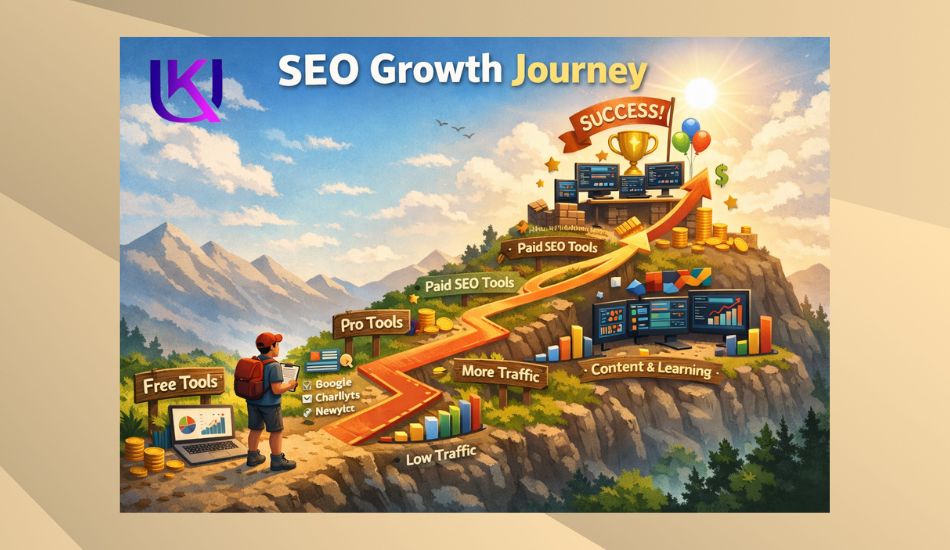
What Beginners Actually Need to Start Keyword Research?
When you first learn search engine optimization (SEO) is easy to believe you need dozens of tools, complicated reports, and advanced SEO metrics.
In reality, most beginners only need a few simple things to start keyword research correctly.
Your main goal is not finding the “perfect” keyword. Your goal is to understand what real people search for and create content that answers their questions clearly.
That means beginners should focus on:
- keyword ideas,
- search intent,
- long-tail keywords,
- content relevance,
- and ranking opportunities.
You do not need huge amounts of data in the beginning. You mainly need enough information to understand:
- what users want,
- how people search,
- and which topics have lower competition.
For example, a beginner blog usually grows faster by targeting specific long-tail keywords instead of broad competitive terms. A keyword like “best bonsai tree” may be very competitive, while “best indoor bonsai tree for beginners” gives clearer user intent and often easier ranking opportunities.
This is where free tools can already help a lot.
- Google Trends helps you spot rising search trends and seasonal topics.
- Google Keyword Planner helps you discover keyword variations and search phrases.
- And Google Search Console (GSC) shows which search queries already bring impressions and clicks to your website.
- Google Analytics (GA4) provides deep insights into user behavior, traffic sources, and conversion tracking.
These tools may not provide every advanced SEO metric, but they help beginners learn the most important part of SEO: understanding user behavior.
At this stage, you should focus more on:
- Building topical authority,
- Creating useful content,
- Organizing content clusters,
- Matching search intent correctly.
Many beginners waste time comparing keyword difficulty scores while ignoring whether their content actually solves the reader’s problem. Google cares heavily about helpfulness, relevance, and user satisfaction. Strong content with clear search intent can often outperform weak content created only around SEO metrics.
As your website grows, your needs change. You may eventually want:
- deeper competitor analysis,
- backlink tracking,
- SERP analysis,
- keyword clustering,
- and content gap research.
That is when paid tools like Ahrefs or Semrush become more valuable.
But in the beginning, learning how to think like your audience matters far more than owning expensive SEO software.
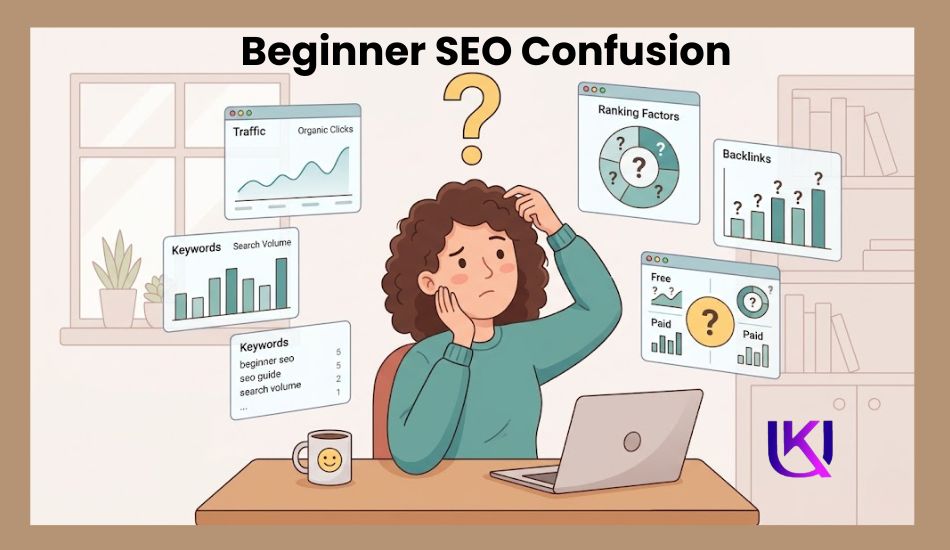
Why Most Beginners Waste Money on SEO Tools?
Many beginners buy SEO tools too early. They watch YouTube videos, read expert blogs, or join SEO groups where people talk about expensive software every day.
After seeing screenshots full of charts, keyword scores, and traffic numbers, it starts to feel like premium tools are the only way to rank on Google.
That is where many people make their first SEO mistake.
You can easily spend hundreds of dollars on tools before learning the basics of keyword research, search intent, or content optimization.
Some beginners pay for advanced features they never even use. Others become distracted by complicated SEO metrics instead of focusing on creating useful content.
Most new websites do not need massive backlink databases, advanced API access, or deep competitor tracking right away.
In the beginning, your biggest goal is usually much simpler:
- finding topics people search for,
- understanding what users want,
- discovering long-tail keywords,
- and creating content that answers real questions.
Free tools already help with many of these tasks. Platforms like Google Trends and Google Search Console can show search behavior, keyword impressions, click-through rate data, and organic traffic patterns. That is enough for many beginners to start learning how SEO works.
Another common problem is chasing numbers instead of user intent. Many new bloggers focus only on search volume or keyword difficulty scores.
They forget that ranking content depends heavily on relevance, search intent, topical authority, and content quality. Even the best SEO software cannot fix weak content that does not help readers.
Paid tools like Ahrefs or Semrush become more useful later when you want to:
- scale content production,
- analyze competitors deeply,
- track backlinks,
- manage multiple websites,
- or improve large keyword strategies.
But before reaching that stage, many beginners can learn SEO successfully without paying for expensive subscriptions every month.
The smartest approach is not buying the most powerful tool first.
It is learning how keyword research, search intent, and content strategy actually work before spending money on advanced SEO software.
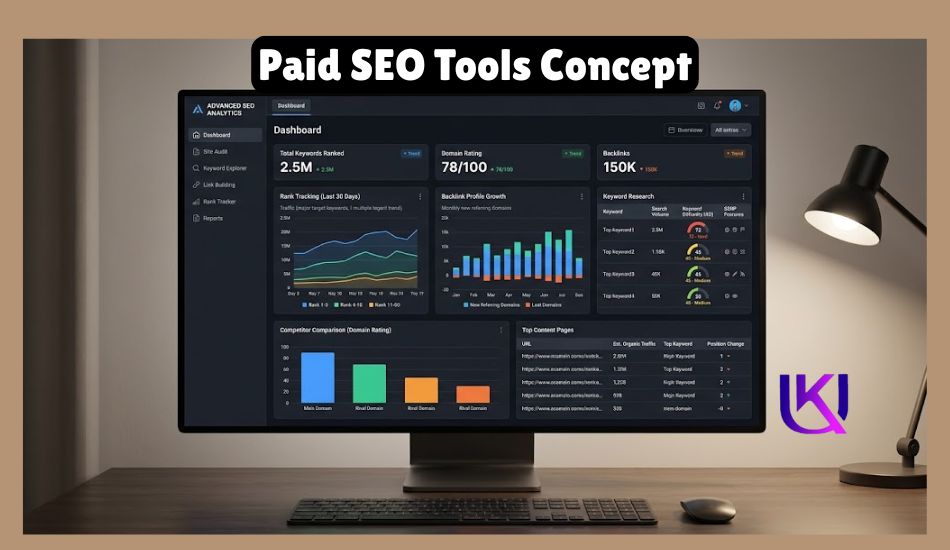
Free VS Paid SEO Tools: The Real Difference
The biggest difference between free VS paid SEO tools is not simply “good” versus “bad.” Both types can help with keyword research. The real difference is how much data, speed, automation, and competitor insight you need as your website grows.
Free SEO tools are excellent for learning the basics. They help beginners understand search intent, discover keyword ideas, and track simple organic traffic patterns. Paid SEO tools go deeper by giving larger keyword databases, advanced SEO metrics, competitor analysis, backlink tracking, and stronger SERP analysis.
For many beginners, free tools already provide enough information to start building content and learning SEO properly.
Here is the real comparison beginners should understand:
| SEO Task | Free SEO Tools | Paid SEO Tools |
| Finding keyword ideas | Good for basics | Much deeper research |
| Long-tail keyword discovery | Possible with manual work | Faster and easier |
| Search volume data | Often limited or broad | More detailed estimates |
| Search intent research | Strong with Google search | Strong with extra data |
| Competitor analysis | Basic | Advanced |
| Backlink tracking | Very limited | Comprehensive |
| SERP analysis | Manual checking | Detailed reports |
| Keyword difficulty scores | Sometimes missing | Usually included |
| Content gap analysis | Rare | Common |
| Keyword clustering | Mostly manual | Automated in many tools |
| Organic traffic estimates | Limited | More accurate |
| Workflow speed | Slower | Faster |
Free tools like Google Trends and Google Search Console(GSC) are often enough for:
- learning SEO basics,
- validating content ideas,
- tracking impressions,
- and understanding audience behavior.
But they usually require more manual research. You may need to combine several tools and spend extra time analyzing search results yourself.
Paid tools like Ahrefs, Semrush, and Moz Pro save time by collecting large amounts of SEO data in one place. They help users:
- analyze competitors faster,
- track backlinks,
- discover ranking gaps,
- monitor keyword positions,
- and scale content strategies more efficiently.
However, beginners often misunderstand that Paid SEO tools do not automatically improve rankings.
They only provide better data and workflow efficiency. Your rankings still depend on:
- content quality,
- search intent alignment,
- topical authority,
- user experience,
- and consistency.
That is why many successful beginner websites still grow using mostly free SEO tools in the early stages.
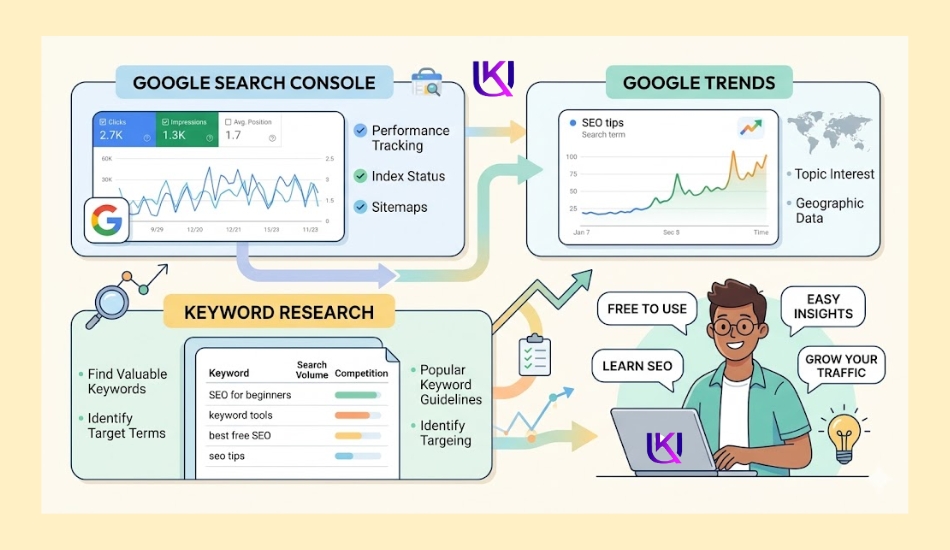
What Free SEO Tools Do Surprisingly Well?
Many beginners underestimate how useful free SEO tools can be. While they may not offer huge keyword databases or advanced automation, they still help you learn the most important parts of keyword research and SEO strategy.
In fact, some free tools come directly from Google, which means they provide valuable insights about real search behavior and user intent.
1. Google Trends: One of the best beginner tools is Google Trends. It helps you discover trending topics, seasonal searches, and rising keyword patterns. This is useful when planning content around topics people are actively searching for. You can compare search terms, spot growing niches, and avoid topics losing popularity.
2. Google Search Console: Another powerful free tool is Google Search Console (GSC). Many beginners ignore this tool at first, but it can become one of the most valuable SEO resources for understanding organic traffic. GSC shows:
- search queries,
- impressions,
- clicks,
- click-through rate,
- and average keyword positions.
For example, you may notice a page ranking on page two for a long-tail keyword you never intentionally targeted. Updating that content around the correct search intent can sometimes improve rankings faster than creating new articles.
This helps you discover hidden ranking opportunities already connected to your website.
3. Google Keyword Planner: It is also useful for finding keyword variations and related search phrases. Although search volume ranges may be broad for free users, Google Keyword Planner still helps beginners understand how keywords connect semantically.
4. Google Analytics (GA4): Configure GA4 to track your website’s internal search bar. This tells you exactly what visitors are looking for once they arrive, which is a “goldmine” for new content ideas.
Free tools can also help with:
- content planning,
- basic SERP analysis,
- topical authority building,
- and search intent research.
Tools like AnswerThePublic are especially useful for discovering question-based searches. These questions often reveal what users genuinely want to know, which helps you create more helpful content.
The advantage of free SEO tools is simplicity.
Many premium platforms contain huge dashboards with advanced SEO metrics that confuse beginners. Free tools often force you to focus on the fundamentals:
- understanding your audience,
- solving problems,
- and creating useful content.
That learning process matters more than advanced software early on.
Free SEO tools may require more manual effort, but they still help beginners:
- find long-tail keywords,
- validate content ideas,
- understand search behavior,
- and build strong SEO foundations without spending money too early.
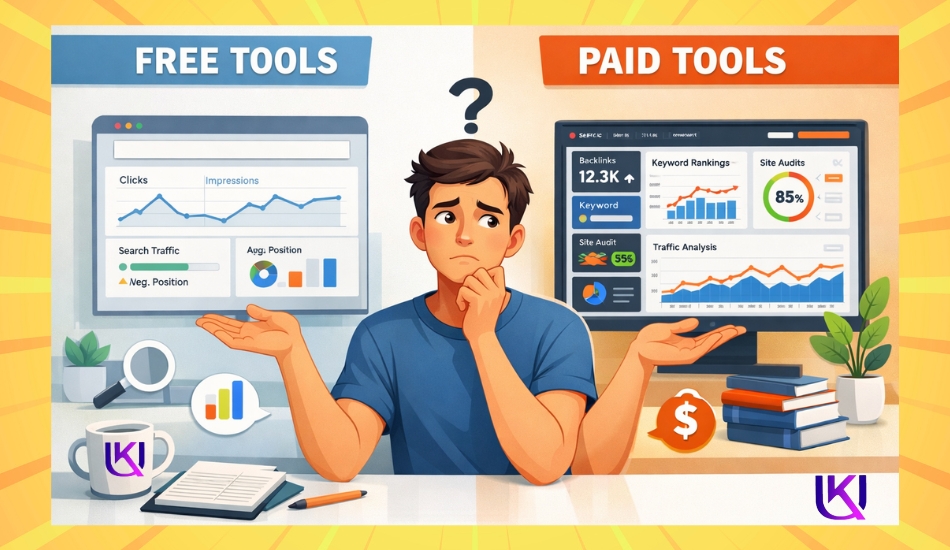
Free VS Paid SEO Tools Pros & Cons for Keyword Research: Do You Really Need Paid Tools?
Free SEO tools are ideal for beginners, local businesses, and small budgets. They provide direct access to foundational site performance data.
However, as your website scales or you need to analyze competitors, paid tools provide the deeper insights, workflow automation, and scale required to aggressively grow search traffic.
Free SEO Tools: Best for budget-conscious starters, solo creators, and basic monitoring.
| Free Tools | Top Free SEO Tools Details | Pros | Cons |
| Google Search Console | Essential for monitoring your exact Google search traffic, indexing status, and technical errors. | 100% free, highly accurate foundational data, and no steep learning curve. | Limited keyword/competitor data, manual analysis required, and missing historical metrics. |
| Google Analytics (GA4) | Provides deep insights into user behavior, traffic sources, and conversion tracking. | ||
| Google Keyword Planner | Offers reliable search volume and keyword ideas directly from Google. |
Paid SEO Tools: Best for SEO agencies, e-commerce sites, and businesses scaling content.
| Paid Tools | Top Free SEO Tools Details | Pros | Cons |
| Semrush or Ahrefs | Industry-standard, all-in-one suites for tracking rankings, auditing sites, and reverse-engineering competitor backlinks. | Deep competitive intelligence, backlink tracking, automated reporting, and vast time savings. | Expensive monthly subscriptions, a steeper learning curve, and potentially too complex for casual users. |
| Screaming Frog is an SEO Spider | Screaming Frog is a Powerful website crawler for technical and on-page audits, a freemium for small sites, and paid for unlimited. |
However, start with free tools to learning for begainner the ropes and track your organic presence. Upgrade to a paid platform when your business goals demand detailed competitor intelligence and backlink tracking. If SEO optimization becomes a recurring, time-sensitive workflow.
Where Free SEO Tools Fall Short
Free SEO tools help learn keyword research, but they also have limitations. As your website grows, you may start noticing gaps in the data, slower workflows, and missing SEO insights that make scaling harder.
One of the biggest weaknesses is limited keyword data.
Free tools often show:
- broad search volume ranges,
- fewer keyword suggestions,
- or incomplete SEO metrics.
For example, Google Keyword Planner may group keyword data into large ranges unless you actively run ads. That makes it harder to estimate true search demand accurately.
Another limitation is competitor analysis.
Free tools rarely provide deep information about:
- competitor keywords,
- backlink profiles,
- organic traffic estimates,
- or ranking gaps.
This becomes important when you start competing in tougher niches. Understanding why competitors rank can help improve your content strategy, keyword targeting, and topical authority.
Backlink analysis is another area where free tools struggle. Backlinks remain an important ranking signal because they help Google measure trust and authority. Most free tools only show limited backlink data or outdated information. Paid platforms like Ahrefs and Semrush maintain much larger backlink databases and provide deeper link analysis.
Free SEO tools also require more manual work.
You may need to:
- combine several tools,
- Check Search Engine Result Pages (SERPs) manually,
- Organize keywords yourself,
- and analyze search intent without automation.
That process can take a lot of time as your content grows.
Advanced features are usually missing, too. Many free tools do not include:
- keyword clustering,
- content gap analysis,
- detailed SERP analysis,
- rank tracking,
- or technical SEO audits.
These features become more valuable when managing larger websites or publishing content consistently.
Another hidden problem is workflow efficiency.
Beginners sometimes believe paid tools only provide “extra features,” but they also save time. Instead of jumping between multiple free tools, premium platforms consolidate large amounts of SEO data into a single dashboard. That helps content creators make faster decisions.
Still, these limitations do not mean free tools are bad.
They simply mean free tools work best during the learning and early growth stages. Once your website starts gaining traction, paid SEO tools become more useful because they help you:
- scale faster,
- analyze competitors more deeply,
- and make better data-driven decisions.
The key is upgrading only when your workflow and content strategy truly need those advanced insights.
When Paid SEO Tools Become Worth the Cost
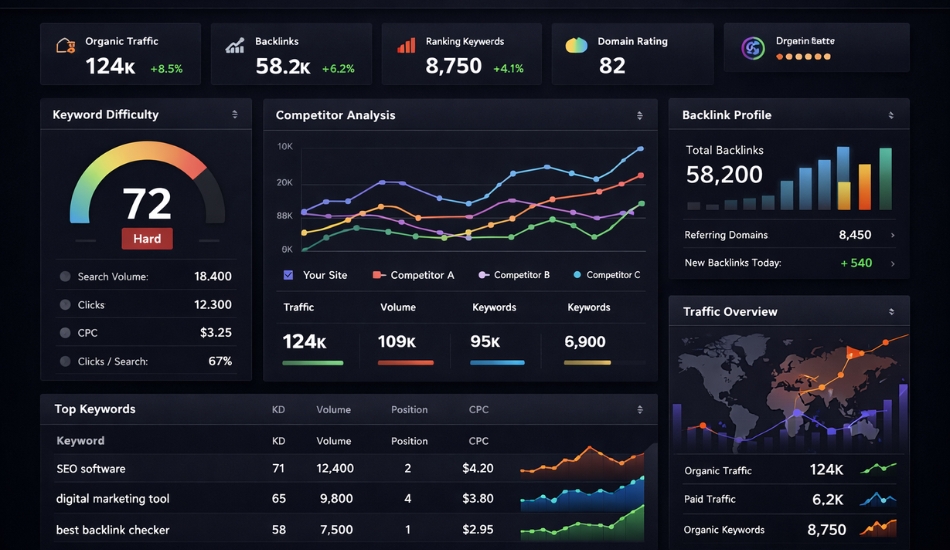
Paid SEO tools become valuable when your website reaches a stage where manual research starts slowing you down. At that point, the goal is no longer just learning SEO basics. The goal becomes scaling content, improving efficiency, and finding better ranking opportunities faster.
Many beginners do not need premium tools immediately. But as your website grows, you may start asking bigger questions like:
- Which keywords are competitors ranking for?
- Which pages bring the most organic traffic?
- What backlinks help top-ranking websites?
- Which content gaps should you target next?
- Which keywords are easiest to rank for?
That is where paid SEO platforms become more useful.
Tools like Ahrefs, Semrush, and Moz Pro help organize large volumes of SEO data into a single workflow. Instead of manually checking many free tools, you can analyze keyword opportunities, (Search Engine Result Page) SERP competition, backlinks, and competitor strategies much faster.
Paid tools are often worth the cost when you:
- publish content regularly,
- manage multiple websites,
- work in competitive niches,
- handle client SEO,
- or depend on organic traffic for income.
For example, affiliate marketers and SEO agencies usually need deeper competitor analysis and backlink tracking. A growing content website may also need keyword clustering tools to organize hundreds of related search terms into topic groups.
Another major advantage is time savings. Free tools often require:
- manual spreadsheets,
- separate browser tabs,
- and repeated Google searches.
Paid platforms automate much of this process. They help you:
- discover low-competition keywords faster,
- track ranking changes,
- monitor backlinks,
- and identify content opportunities more efficiently.
That speed matters more as your workload increases.
Paid SEO tools also provide stronger SERP analysis. Instead of only seeing search results manually, you can study:
- domain authority,
- traffic estimates,
- ranking difficulty,
- backlink strength,
- and competitor weaknesses.
This makes decision-making easier when planning large content strategies.
However, one important truth remains that buying premium SEO software does not guarantee rankings.
Many beginners assume expensive tools automatically create success. But SEO still depends heavily on:
- content quality,
- search intent alignment,
- topical authority,
- internal linking,
- and user experience.
Paid tools simply help you make smarter and faster decisions using better data. The best time to upgrade is usually when:
- free tools start limiting your workflow,
- Manual research takes too long,
- or your website begins generating enough traffic or income to justify the investment.
That way, you spend money strategically instead of paying for features you are not ready to use.
Can You Rank on Google Using Only Free SEO Tools?
Yes, you can rank on Google using only free SEO tools, especially when you are working in a low to medium-competition niche. Many successful beginner websites start this way because the real ranking power does not come from expensive software. It comes from how well you understand search intent and how useful your content is.
Free SEO tools are enough to guide your keyword research, content planning, and basic SEO strategy. Tools like GSC help you see which keywords already bring impressions and clicks. This means you are not guessing what to write about. You are using real data from Google.
You can also use Google Trends to find topics that are growing in popularity. This helps you choose keywords with rising demand instead of wasting time on declining topics. Combined with Google Keyword Planner, you can still build a strong list of keyword ideas and variations.
Ranking on Google is not only about having the best SEO tool. It is more about:
- matching search intent correctly,
- creating helpful and detailed content,
- targeting low-competition long-tail keywords,
- and building topical authority over time.
For example, a beginner blog that targets specific long-tail keywords like “best indoor plants for low light beginners” can often rank faster than a general site targeting highly competitive keywords. This is possible even with free tools because the advantage comes from content focus, not tool pricing.
However, using only free tools does require more manual effort. You may need to:
- Analyze search results by hand,
- Check competitors one by one,
- Organize keywords in spreadsheets.
This is where time becomes the trade-off.
Paid tools make this process faster and more scalable, but they are not required to achieve rankings.
Free SEO tools are enough to get started, learn SEO properly, and even build a ranking website. Paid tools simply help you move faster and work at a larger scale.
If your content is helpful, clear, and aligned with search intent, Google can rank it regardless of the tool you used to find the keyword.
Best SEO Tool Setup for Different Budgets
The best SEO tool setup is not the most expensive one. It is the one that matches your current stage, budget, and workload. Many beginners waste money by choosing advanced tools too early, while others stay stuck with free tools even after their websites start growing.
The smart approach is to match your tools with your goals.
1. $0 Budget SEO Setup Beginner Stage
If you are just starting, you do not need paid tools at all. Your focus should be on learning keyword research, understanding search intent, and publishing helpful content.
At this stage, you can rely fully on free tools:
- GSC for tracking real search queries and website performance
- Google Trends for finding trending and seasonal topics
- Google Keyword Planner for basic keyword ideas and variations
Best for:
- new bloggers
- personal websites
- hobby projects
- learning SEO fundamentals
Your goal: Focus on content quality, not tool features.
2. Low Budget SEO Setup Growth Stage
When your website starts getting some traffic, you may want slightly deeper keyword insights without spending too much. At this stage, you can add Ubersuggest for keyword suggestions and competitor ideas. You still use free tools, but now you get:
- Faster keyword discovery
- Basic competitor analysis
- Improved content planning
Best for:
- growing blogs
- niche websites
- freelance writers
- small affiliate projects
3. Advanced SEO Setup Scaling Stage
When SEO becomes serious either for business, clients, or income, you need faster data, deeper analysis, and better competitor tracking. At this stage, paid tools become useful:
- Ahrefs for backlink analysis and competitor research
- Semrush for a full SEO keyword content strategy
- Moz Pro for domain authority tracking and SEO audits
Best for:
- SEO agencies
- affiliate marketers
- eCommerce sites
- content-heavy websites
What you Achieve:
- faster keyword research
- deep competitor insights
- backlink tracking
- content gap discovery
- scalable SEO workflows
4. The Simple Rule to Choose Your Setup
You do not choose tools based on popularity, but choose them based on pressure in your workflow:
- If you have time, use free tools
- If you need speed, add low-cost tools
- And if you need scale, invest in premium tools
So, the right SEO setup is always the one that helps you publish better content faster, not the one with the most features. As your website grows, your tools should grow with you, not before you need them.
Beginner Mistakes When Choosing SEO Tools
Most beginners do not fail at SEO because they lack tools. They struggle because they choose tools before understanding what keyword research actually means.
| Mistake | What Beginners Do | Why It Hurts SEO | Better Approach |
| Buying paid tools too early | Subscribe to tools like Ahrefs or Semrush before learning the basics | They get confused by advanced data and waste money without using features | Start with free tools first, learn keyword research, then upgrade when needed |
| Focusing only on search volume | Choose keywords only based on high numbers from tools like Google Keyword Planner | High volume does not mean easy ranking or real traffic | Focus on search intent + low competition keywords |
| Ignoring search intent | Create content without checking what users really want | Content does not match Google results, so it fails to rank | Study SERPs and match content type: blog, guide, product page, etc. |
| Using too many tools | Jump between multiple SEO tools without a system | Confusion, messy workflow, and inconsistent keyword research | Stick to 2–3 tools and build a simple workflow |
| Not organizing keywords | Collect keywords, but do not group them into topics | Hard to build topical authority or content clusters | Use keyword clustering and content planning structure |
| Ignoring free tools | Avoid tools like Google Search Console and Google Trends | Miss real Google data and performance insights | Use free tools first for real user behavior data |
| Thinking tools create rankings | Believe SEO software alone improves ranking | Leads to over-dependence on tools instead of content quality | Focus on content usefulness, relevance, and user intent |
SEO tools are only support systems. Real ranking success comes from understanding search intent, creating helpful content, and building topical authority, not from relying on expensive software.
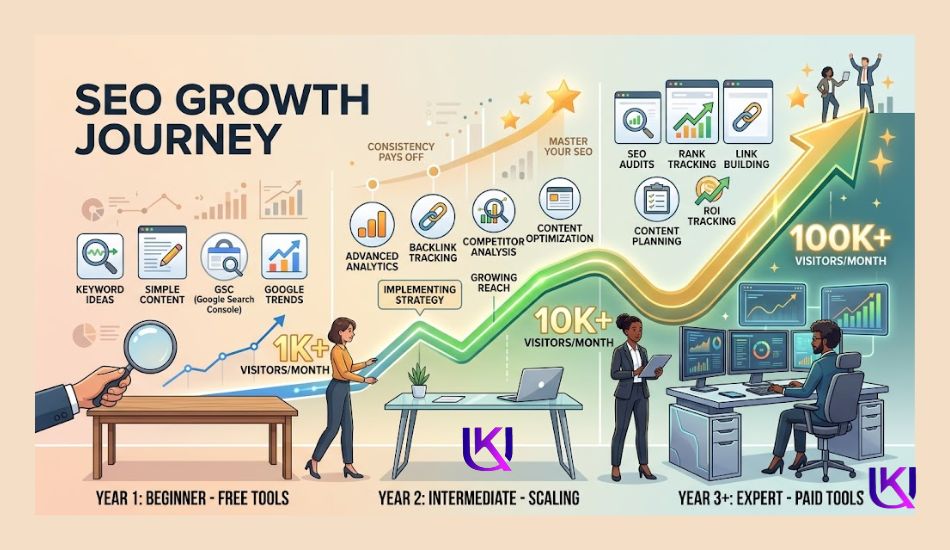
How to Choose the Right SEO Tool for Your Goals?
Choosing the right SEO tool is not about picking the most popular one. It is about matching the tool with your current goal, skill level, and how much SEO work you are doing.
Most beginners feel confused because they compare too many tools at once. Instead of asking “Which tool is best?”, the better question is What do I need right now for keyword research and content growth?
Step 1: Identify Your SEO Stage
Before choosing any tool, you should know where you are in your SEO journey.
- Beginner Stage: You are learning keyword research and publishing your first content
- Growth Stage: Your website has traffic, and you are improving rankings
- Scaling Stage: You are growing fast, working with clients or multiple sites
Each stage needs different tools.
Step 2: Match Tools With Your Real Needs
A. Beginner Needs Learning Phase:
At this stage, you do NOT need advanced SEO software. Focus on keyword ideas, search intent understanding, and basic performance tracking.
Best tools:
- GSC sees real search queries and clicks
- Google Trends finds trending topics and seasonal keywords
- Google Keyword Planner basic keyword suggestions
Goal: Learn how users search, not how tools calculate data.
B. Growth Needs Traffic Building Phase:
Now you need faster keyword research and light competitor insights. You may add Ubersuggest keyword ideas and competitor basics
Goal: Find better keywords faster and improve content strategy.
C. Scaling Needs Business / Income Phase:
At this stage, SEO becomes more data-driven and competitive.
Useful tools:
- Ahrefs is best for backlink research and competitor tracking
- Semrush is a full SEO keyword and content system
- Moz Pro is an authority on SEO audits
Goal: Save time, scale content, and beat competitors.
Step 3: Focus on Workflow, Not Features:
Many beginners choose tools based on features they never use.
Instead, focus on:
- How fast can you find keywords
- How clearly you understand search intent
- And how easily can you plan content
- how well you track results
A simple tool used correctly is better than a powerful tool used incorrectly.
Step 4: Follow This Simple Decision Rule
- If you are learning, use free tools only
- If you are growing, add one low-cost tool
- Or, if you are scaling, invest in premium SEO platforms
However, the right SEO tool is the one that helps you make better content decisions, not the one with the most features or the highest price. When your keyword research becomes clear, your content becomes stronger, and rankings follow naturally.
Final Verdict: Do Beginners Really Need Paid SEO Tools?
The simple answer is: no, not at the beginning.
If you are just starting keyword research, you do not need to spend money on premium SEO tools. You can learn almost everything important using free tools and still build a website that ranks on Google.
Tools like Google Search Console and Google Analytics(GA4) already show you real search queries, impressions, and clicks. That alone is enough to understand what users are searching for and how your content is performing.
For keyword ideas and trend discovery, Google Trends helps you see what topics are growing or losing interest. And Google Keyword Planner gives you basic keyword suggestions that you can use to plan your content.
At this stage, your success depends more on understanding search intent, writing helpful content, targeting long-tail keywords, and building topical authority over time.
Paid SEO tools like Ahrefs and Semrush become useful only when your website grows, and you need faster keyword research, deeper competitor analysis, backlink tracking, and large-scale content planning.
Screaming Frog API is an SEO Spider and a powerful website crawler for technical and on-page audits. But even then, these tools do not improve rankings by themselves. They only make research faster and more organized. Your content quality and strategy still decide your success.
Start with free tools, learn SEO properly, and upgrade only when your workflow actually needs not when marketing pressure tells you to.
Relevant article: How to Make Your WordPress Site Load in Under 2 Seconds?
FAQ: Free VS Paid SEO Tools for Beginner Keyword Research.
1. Are free SEO tools enough for keyword research?
Yes, free SEO tools are enough when you are starting. Tools like Google Search Console (GSC) and Google Keyword Planner help you find real search queries, keyword ideas, and basic performance data. They are enough to learn keyword research and start ranking in low-competition topics.
2. What do you actually need right now for keyword research without wasting money?
This guide will help you understand what free SEO tools can really do, where paid tools become valuable, and which SEO metrics matter most. How beginners can build topical authority without overspending on software they may not even use yet.
3. What is the best free SEO tool for beginners?
There is no single “best” tool, but a strong beginner setup includes: Google Trends for trending topics. Google Keyword Planner for keyword ideas. Google Search Console (GSC) for real performance data. Together, these tools give a complete starting point for keyword research.
4. When should I start using paid SEO tools?
You should consider paid tools like Ahrefs, Ubersuggest, and Semrush, among others. If your website gets regular traffic, you need to publish content consistently. Manual keyword research is slow and requires competitor analysis or backlink data. Before that stage, free tools are usually enough.
5. Can beginners rank on Google without paid SEO software?
Yes. Many beginner websites rank using only free tools. Google does not rank websites based on SEO tools. It ranks based on content quality, search intent, match topical authority, and user satisfaction. Paid tools only make research faster; they do not guarantee rankings.
6. Do paid SEO tools automatically improve rankings?
No. Paid tools do not directly improve rankings. They only provide deeper keyword data, competitor insights, backlink analysis, and faster workflow. Your ranking depends on how well you use that data to create helpful content.
7. What matters more than SEO tools?
More important than any tool is understanding search intent, writing helpful content targeting long-tail keywords, and building topic clusters, improving content quality over time. These factors have a much greater impact on rankings than the choice of software.